On this page, we address frequent questions from customers, clarify what is true, and correct common misconceptions about Steinway pianos. Each response reflects the perspectives of our skilled Steinway craftspeople, engineers, technicians, and service professionals — the people who build, maintain, and restore these instruments every day.
Claim: “Golden Age” Steinways used better, old-growth woods, so rebuilt vintage Steinways are better than what Steinway builds today.Status: False.
A piano’s sound begins with the soundboard. Over decades, any soundboard — even a great one — changes under constant string tension and environmental stress. That is why comprehensive restorations typically involve replacing the soundboard to restore full tonal potential.
 Steinway’s standards for soundboard spruce have only grown stricter. Today, Steinway sources Sitka spruce from a single remote island in Alaska chosen for exceptional grain density and consistency — materials selected to support clarity, projection, and long-term stability. This wood is as old or older than the Eastern (United States/Canada) spruce that Steinway would have harvested decades ago for soundboards — and it is, in fact, even better soundboard wood, since it is from a climate further north, with shorter summers, giving us the “slow growth” so essential for the best soundboard material. There is spruce in the Pacific Northwest that would be easier to procure, but Steinway rejects it because it would be considered a lesser grade for us, acoustically. That spruce grows at a latitude and in a climate more similar to what Steinway would have procured in the late 1800s and throughout most of the 1900s. This is not to say that Steinway chose a lesser grade of spruce for their pianos during that timeframe — only that they simply did not have access to this Alaskan Sitka spruce and used what was geographically local and available to its New York factory. It was the best wood available at the time, but today we have access to (and use) superior wood for the soundboard and other parts of the Steinway piano that we did not have available to us in our storied past. Today’s soundboards are superior to those of yesteryear. One does not expect to see a “vintage” piano on the performance stage, and this is why.
Claim: Steinway’s cast-iron plates from the late 1800s and early 1900s are superior to the plates Steinway uses today.Status: False.
A plate is an engineering component designed to hold immense tension and stabilize the instrument. Claims of historic plates being “superior” overlook what has changed most over the past century: recent and astounding advances in metallurgy, process control, measurement, and manufacturing precision. Moreover, modern tolerances are verified in ways that simply were not possible generations ago.
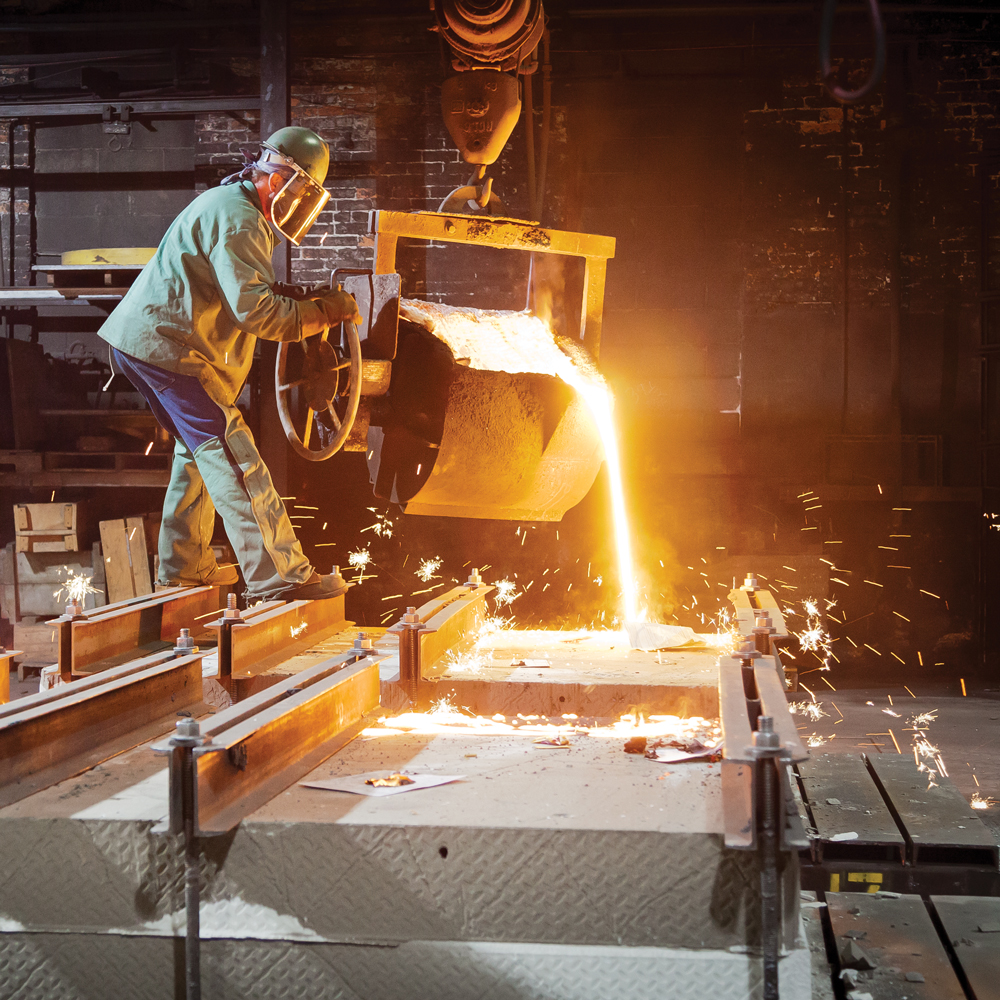 Today, Steinway’s plates are produced at the Steinway-owned O.S. Kelly Foundry in Springfield, Ohio — purpose-built for Steinway’s requirements and continually refined to meet current specifications. Historic plates deserve respect for what they made possible in their time. But this respect should not be mistaken for proof of anything that nears the superiority of modern production. It is a fact that most of the piano plates from decades ago would not meet the very precise specifications we have today. This fact is not meant to disparage what Steinway did years ago. They built every part to the best of their capability — but they simply did not have the technology at their disposal to achieve the level of precision that we are able to achieve today.
Question: Do Steinways from the early 20th century — or a supposed “Golden Age” — have a warmer, more resonant sound?Answer: Categorically, no.
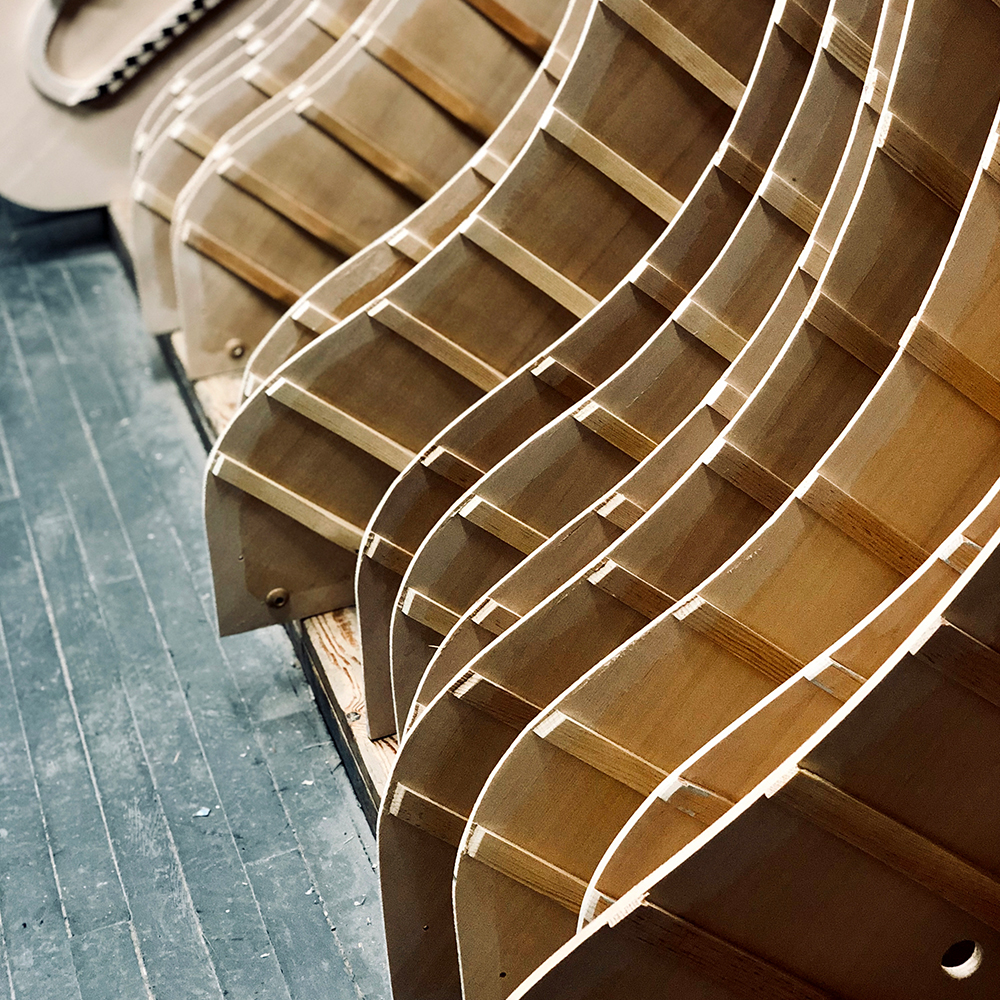 This myth has been propagated by rebuilders and sellers of older instruments. No “original” Steinway made a generation (or generations) ago appears on the top concert stages of the world, due to age and loss of tonal characteristics. The single most important part of a piano in terms of sound is (as its name suggests) the soundboard. It is a fact that over decades, and especially as a piano nears a century old, its soundboard loses its crown, which is a vital element that gives a soundboard its resonance and projection (there is a reason so much design and effort goes into implementing this crown). The loss of the soundboard crown is an unavoidable part of the aging process of any piano, and it is why in pianos this old, the soundboard is almost always removed and replaced in a full restoration by piano rebuilders. An old soundboard that has lost its crown cannot get that crown “re-installed”: the only solution is to install a newly built soundboard with a proper crown. Neither the soundboard being replaced (which has changed dramatically in structure over many decades) nor the brand-new soundboard being installed on a restored piano will have the same sound that the original soundboard had in that piano when it was originally built. So, if someone is claiming that a decades- or century-old Steinway that has been fully restored is going to sound like that piano did many years ago, they are being dishonest. In a full restoration, virtually all of the most important parts in terms of sound (the soundboard, the pinblock/wrestplank, the action/hammers) are being completely replaced. At Steinway, in addition to building new Steinways, we also rebuild/restore older Steinways. We are always honest with our restoration clients and let them know that if they want a Steinway that looks like what would have originally been built at our factory many decades ago and what they might imagine from their childhood or family photos, we can absolutely do that. But if your goal is top performance and the full range of modern Steinway capability, the most direct path is to play and select among new Steinways.
Question: Why do so many websites and sellers talk about a “Golden Age” for Steinway pianos?Answer: The phrase has persisted for generations because it is useful in the resale market. Henry Z. Steinway famously observed that the “Golden Age” was always a few decades back — a moving target that tended to romanticize whatever era was currently being sold.
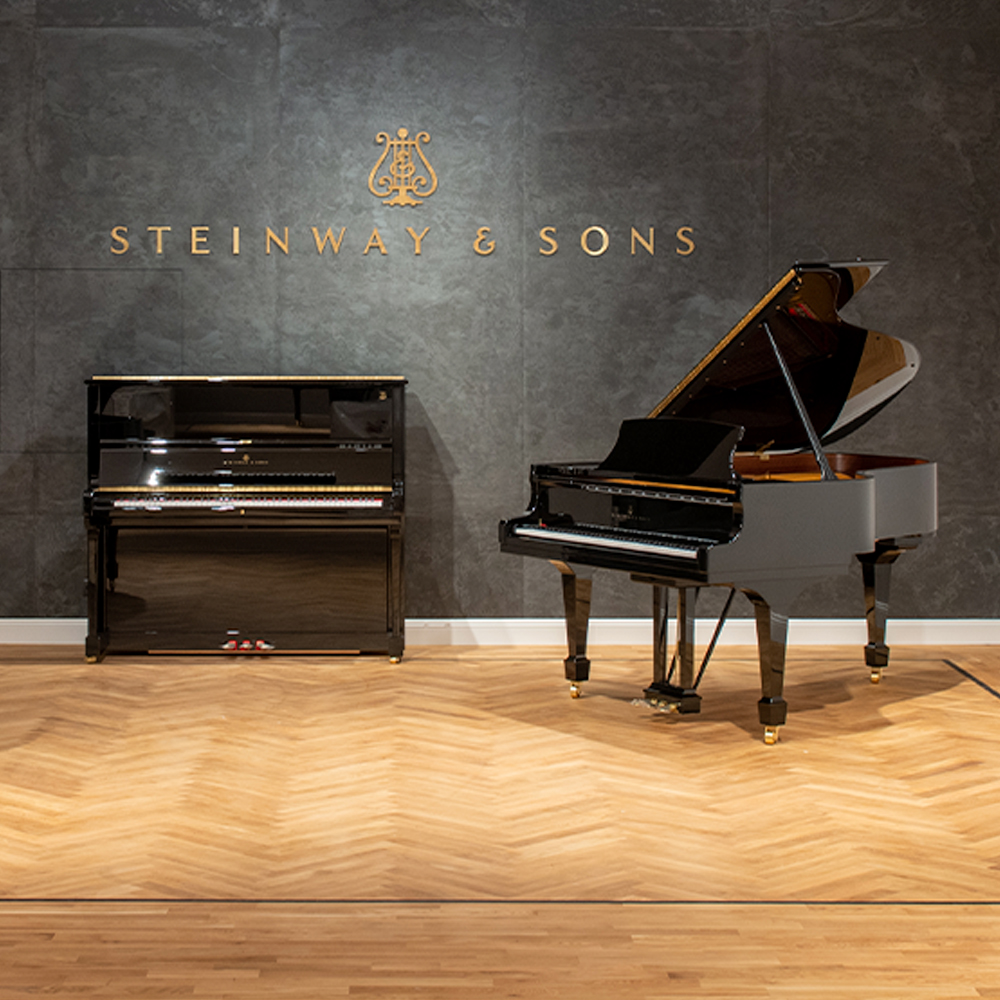 There are a very limited number of carefully selected piano dealerships that can sell brand-new Steinway pianos (currently less than 50 in the Americas and less than 100 worldwide). There are many times that number of piano rebuilders, other piano dealerships, and individuals who cannot sell new Steinways but often sell used or rebuilt Steinways. Unable to sell new Steinways, they romanticize the quality of their older Steinways. The “Golden Age” for Steinways is often presented by such sellers as circa 1900–1940. This is especially because almost all of the Steinways from this period have aged to the point where they have needed to be rebuilt. The most reliable approach is always the same: evaluate the specific piano in front of you, its condition, and make certain any restored Steinway comes via the Steinway Restoration Center, which provides the only authorized Steinway piano rebuilding services in the world.
Claim: “If you change the tires on a Ferrari, it is still a Ferrari — so changing parts on a Steinway shouldn’t matter.”Status: Partially correct.
Routine service and normal replacement parts do not change what an instrument is. A hammer replacement, regulation work, or hardware service does not make a Steinway any less a Steinway.
 The question becomes more serious when core acoustic systems are removed and replaced outside Steinway & Sons. In a full restoration of a Steinway, the soundboard and pinblock/wrestplank are both being replaced. Steinway does not sell its soundboards and pinblocks to anyone, and these are two of the components that are most core to the sound of a Steinway. So, if you were to use the Ferrari analogy and say that both the engine and the transmission were fully replaced with components made by a company other than Ferrari in a facility not run by Ferrari, we feel that it would be fair to question if that is still a genuine Ferrari. By the same logic, it is fair to question the authenticity of a Steinway that has had its key musical parts (soundboard and pinblock/wrestplank) removed and replaced by non–Steinway technicians in a non–Steinway facility using non–Steinway parts.
Question: Some rebuilders or manufacturers offer warranties longer than Steinway’s five years. How?Answer: With any warranty, the first question is simple: who stands behind it?
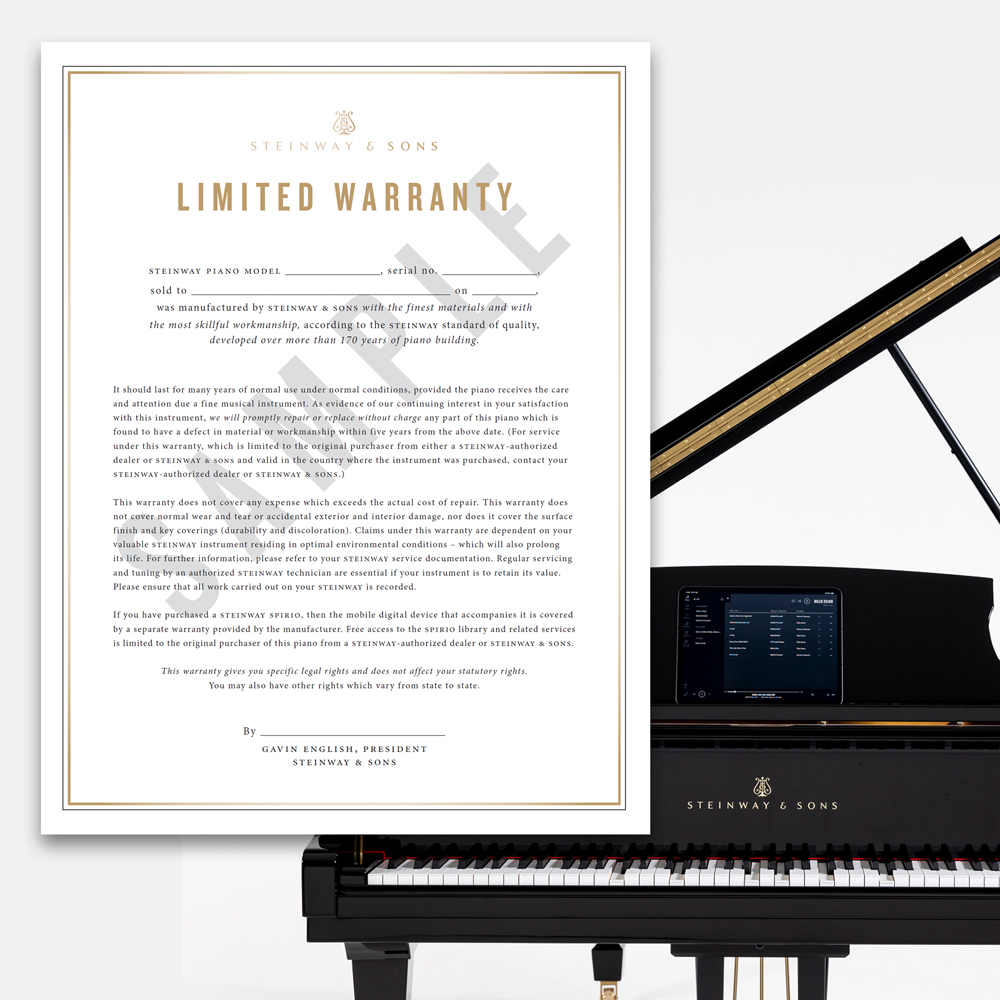 With a Steinway warranty, you have the confidence of knowing that Steinway & Sons, founded in 1853, stands behind our product and its warranty. When a small company or rebuilder offers a warranty, they often give more years to allay fears regarding quality — with smaller or less respected brands often going to 10 or 20 years on their warranty to give the impression that quality is not an issue. But understanding what the warranty covers (and doesn’t cover), what hidden costs there may be, and if the company or individual who grants the warranty will even be around servicing pianos in 10 or 20 years is a key consideration.
Question: Craftmanship is the bedrock of Steinway & Sons. If a rebuilder has someone who worked in the Steinway factory, can they “recreate the Steinway recipe”?Answer: It’s not that easy.
Steinway craft is not the product of one individual; it is the product of a finely tuned system. Steinway pianos are built by specialized craftspeople across many disciplines, supported by controlled environments, proprietary processes, and precise tooling that work together to produce a consistent result.
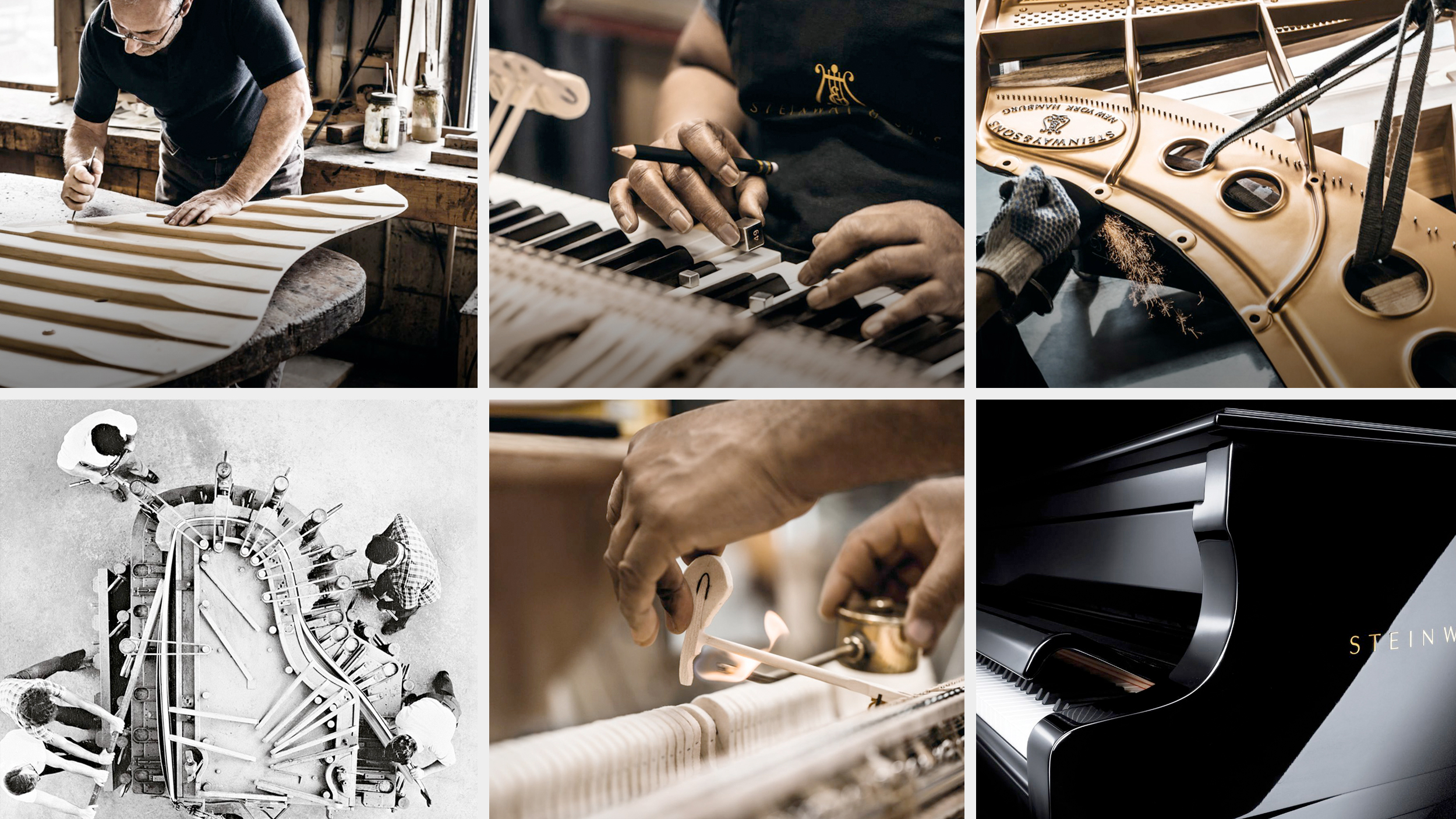
A former Steinway employee may bring valuable experience. That experience alone cannot reproduce the full Steinway process outside the factory — any more than one specialist could replicate an entire institution. What matters is the totality: materials, measurement, conditioning, installation, voicing, and the standards applied at every step.
Today’s technology ensures that the Steinway recipe is met with precision unattainable before. No single craftsperson at Steinway is bigger than the Steinway name and the Steinway process — and all our craftspeople in our factory understand this. The true danger is in individuals outside of Steinway who believe they can do multiple different parts of a process that at Steinway are all done by master craftspeople in each of those very different areas. There is a saying, “jack of all trades, master of none,” which we feel is very appropriate when rebuilders talk about a single former Steinway craftsperson or small group of former Steinway craftspeople being able to emulate what happens within the walls of the historic Steinway Astoria factory.
Question: When deciding between restoring a Steinway or buying a new Steinway, what matters most?Answer: Start with your priority.
If provenance, family history, and preserving a beloved instrument’s story matter most, restoration can be a meaningful path. Steinway also restores pianos and can return an older instrument to excellent condition with deep respect for its original character.
However, Steinway was founded with the mission of continuously improving the piano to build “the best piano possible.” Henry E. Steinway understood (and expected) that the Steinway pianos built next year would and should be better than the Steinways he was building that day. Continuous improvement has always been a part of the Steinway mission.
When you restore a piano, a large portion of that instrument is being reused as-is, so it is “frozen in time.” To think that a 1926 Steinway is essentially the same as a 2026 Steinway does a huge disservice to 100 years of improvement in every part of the manufacturing process. It negates every patent, every new procedure, and every material upgrade. It omits the use of laser measuring and improved conditioning processes that allow for more precision in every part of the manufacturing process. In addition, age plays a factor in degrading every part of a piano (even a Steinway) to different degrees. While the parts most affected by age as well as use (such as the soundboard, pinblock, action, etc.) are completely replaced in a full restoration, the parts that are reused (perhaps after being refinished/painted) are still the age of that piano.
If your priority is top performance — maximum tonal potential, modern stability, and the full benefit of decades of continuous improvement — a new Steinway is the stronger choice. Steinway has refined materials, processes, and precision over generations, and those improvements accumulate. There is a reason the world’s leading venues keep their concert instruments current and maintained to concert standards: dependability, musicality, and performance.
Question: Is a new Steinway worth the price?Answer: Absolutely.
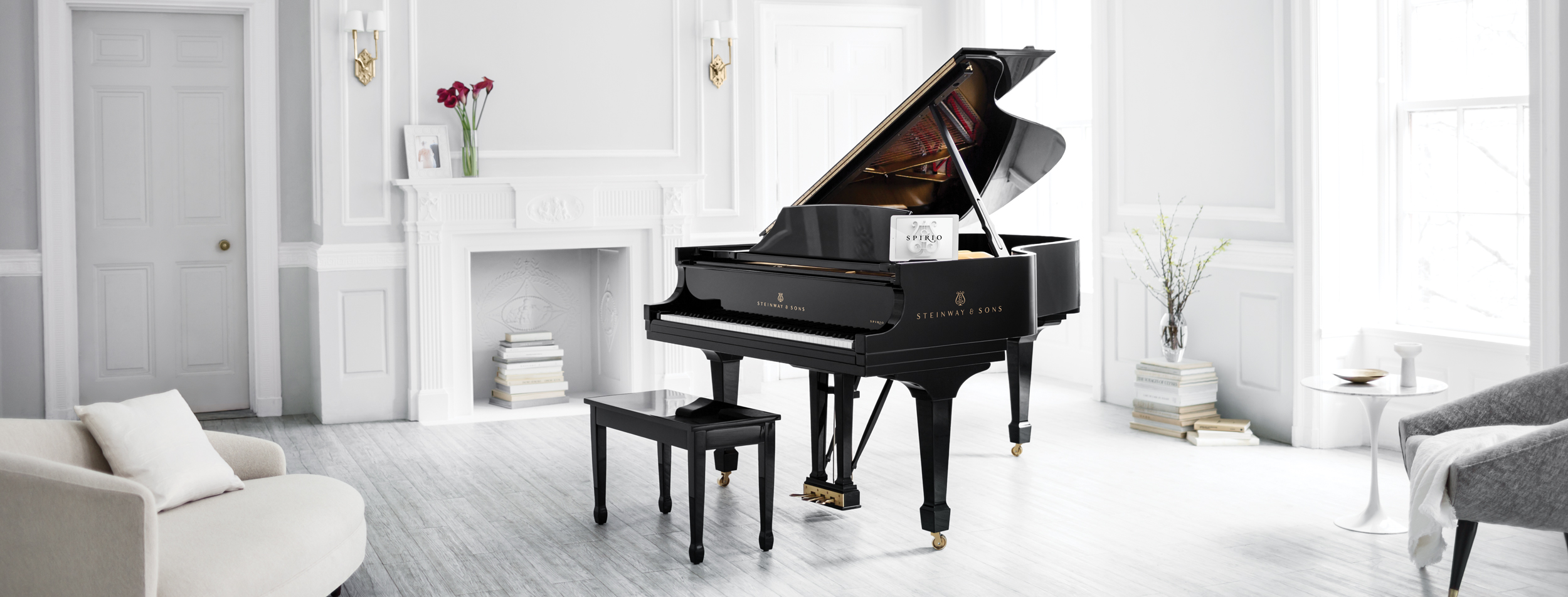
We tell customers in our showrooms to buy the finest piano their budget allows. A better piano helps a beginner learn with greater ease, gives an intermediate player more room to grow, and allows an accomplished pianist to play with the fullest range of expression. When budget permits, a new Steinway is the best choice, for several important reasons.
 The finest Steinways ever built are the Steinways we are building today. That is the result of a culture of continuous improvement established by Henry E. Steinway and carried forward for more than 170 years. Every generation of Steinway craftspeople, engineers, technicians, and designers has looked for ways to improve the instrument — in design, materials, precision, durability, tone, touch, and beauty. When you purchase a new Steinway, you are purchasing the most advanced expression of that legacy.
A new Steinway is more expensive than many other pianos, including many used or rebuilt Steinways. But that price reflects what goes into the instrument: exceptional materials, highly specialized craftsmanship, exacting standards, and a manufacturing process in which quality is never sacrificed for speed. In our factory, a grand piano takes approximately a full year to build. Nothing is rushed. Each station is manned by craftspeople with deep expertise, many of whom have spent decades building Steinway pianos.
In recent years, Steinway has made major investments in advanced manufacturing technology — not to replace craftsmanship, but to enhance it. We use precision technology only where it allows us to build a better piano.
One example is our Rim CNC technology. Each individual rim is digitally mapped so that the soundboard can be machined for an exceptionally precise fit — accurate to within thousandths of an inch. This level of precision was not previously possible by hand. It also eliminated the need for the quarter-round molding visible on older Steinways, because the soundboard can now meet the rim with remarkable accuracy.
The “crown” of a piano’s soundboard is the precision curvature of its surface to compensate for the downward pressure of the strings. Modern Steinway soundboards are produced using digitally calculated crown specifications and computer-controlled shaping processes. This helps ensure extraordinary consistency in the crown of the soundboard — a critical factor in sustain, resonance, tonal color, and projection.
The same philosophy extends throughout the piano. Today’s Steinway plates benefit from advanced casting and machining methods for cleaner tolerances, more precise hitch-pin placement, and improved scale accuracy. Modern keybeds are produced with a carefully controlled crown for greater consistency of touch, while redesigned action geometry and CNC–machined action rails allow for more precise hammer alignment and more responsive control.
Hammer making has also advanced significantly. Today’s Steinway hammers use premium felt and precision shaping profiles that vary across the scale of the instrument, helping to create a tone that is balanced, stable, clear, and singing. Our modern damper systems provide more uniform string contact and cleaner note separation, improving sustain control and consistency across the keyboard.
Materials are another essential part of the Steinway investment. A typical grand piano contains more than 10,000 individual parts. For a manufacturer building to a price point, that creates thousands of opportunities to substitute lower-grade materials, alternate wood species, plastics, or other man-made components. Steinway does not build to a price point: we build to a standard.
That standard begins with wood selection. Steinway soundboards are made from premium Alaskan Sitka spruce chosen for exceptional grain, strength, and acoustic properties. Hard rock maple from upstate New York and Canada is used for the rim because of its density and structural strength. African Sapele is used for the inner rim, giving modern Steinway grands the beautiful grain pattern visible inside the instrument. Today’s rims are also conditioned for weeks in temperature- and humidity-controlled environments before assembly, helping ensure long-term stability under the more than 20 tons of string tension exerted on a concert grand.
A new Steinway also includes numerous aesthetic and functional refinements developed over time, from slow-fall fallboard technology and premium ebony sharps to advanced high-gloss finishes and carefully matched Crown Jewel veneers.
You can learn more about these modern manufacturing advancements on our Today’s Steinway page.
It is also worth noting that the Steinways heard on the world’s great concert stages are almost always newer instruments. Concert pianos are often replaced after years of heavy professional use — not because they are no longer fine instruments, but because today’s Steinways continue to advance. A Steinway built in 2026 benefits from meaningful improvements over one built in 2016, just as that instrument benefited from improvements over earlier generations.
A new Steinway is a significant investment, but it is an investment in the most refined, most advanced, and most complete Steinway we have ever made — an instrument built for a lifetime of musical possibility.
Question: Is a new Steinway piano better than a used Steinway?
Answer: Yes, by far.
A used Steinway can be an excellent piano. One of the great strengths of Steinway & Sons is that our instruments are built to last. With proper care, stable climate conditions, and expert maintenance, a Steinway can provide extraordinary musical enjoyment for generations.
That said, when circumstances allow, a new Steinway offers important advantages in performance, longevity, and peace of mind.
Every piano reflects the knowledge, materials, patents, tools, and manufacturing methods available at the time it was built. Steinway has never stopped refining the instrument. Each year brings improvements in design, materials, workmanship, precision, and performance. Over the course of a decade or more, those refinements become substantial.
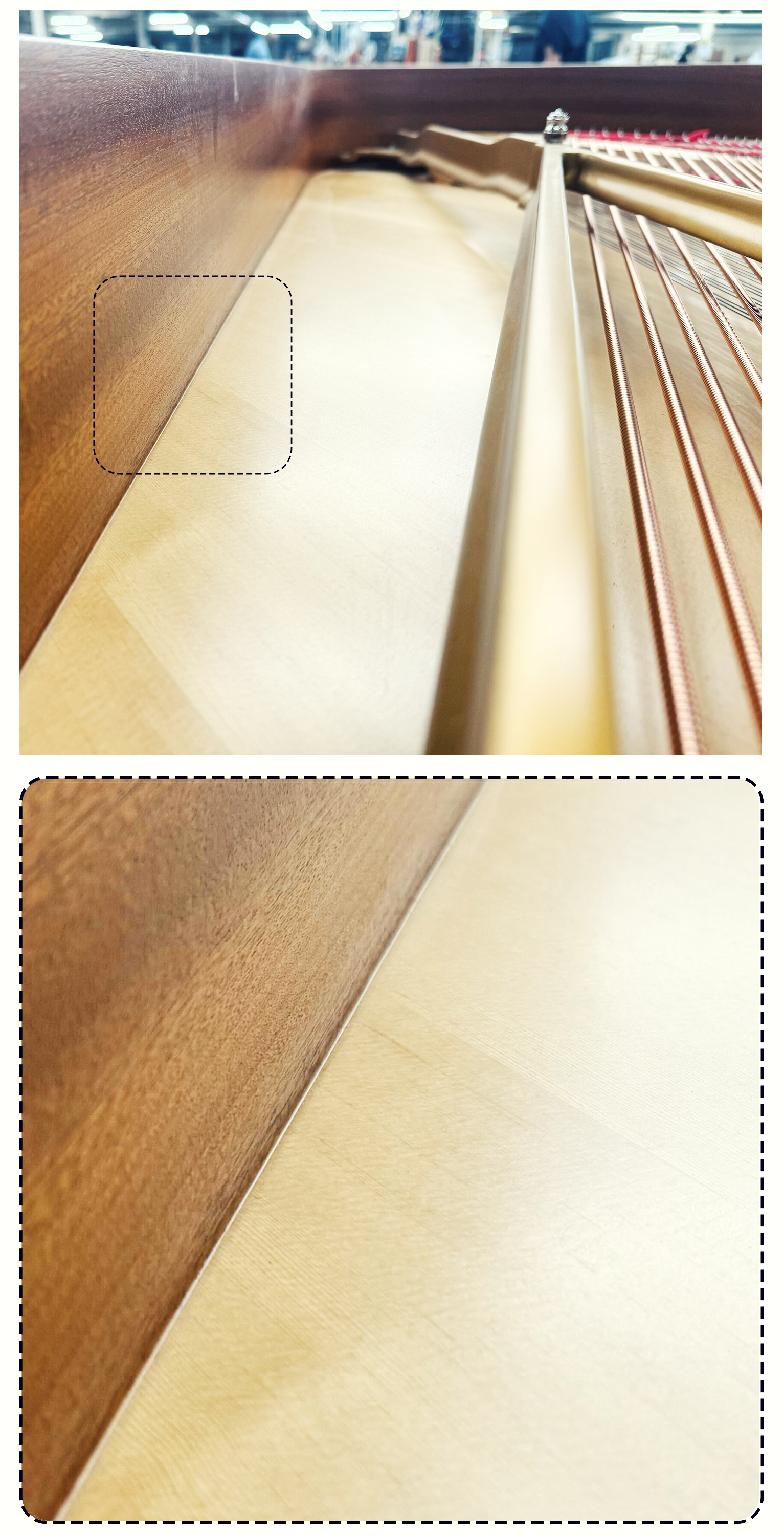 One visible example can be found on the bass side of the soundboard in many older Steinways, where a quarter-round molding appears along the rim. Before the introduction of Steinway’s precision Rim CNC technology, this molding helped address the limitations of fitting a soundboard to a rim by hand. Today, each rim is digitally mapped and each soundboard is machined for a remarkably precise fit. This improves not only the appearance of the instrument but also the acoustic efficiency of the soundboard-to-rim connection.
Other modern improvements are found throughout the piano. Today’s Steinway soundboards are produced using digitally calculated crown specifications and precision shaping methods. Modern plates benefit from advanced casting and machining technologies that support cleaner tolerances, more accurate hitch-pin placement, and improved scale precision. Keybeds, keyframes, action rails, hammers, and dampers have all been refined to support greater consistency, control, stability, and tonal beauty.
Material selection and conditioning have also advanced. Today’s Steinway soundboards use premium Alaskan Sitka spruce selected to demanding standards for grain and acoustic performance. Modern wood-conditioning processes help control moisture content and dimensional stability in ways that were not possible decades ago. Rims are conditioned for weeks in climate-controlled environments before assembly, helping prepare them for the immense structural demands placed on a concert grand piano.
None of this diminishes the value of older Steinways. They were built to the highest standards of their time, and many remain exceptional instruments. But when considering a used Steinway, condition matters enormously. A piano’s musical life depends not only on when it was built, but on how it has been played, serviced, stored, moved, and maintained. Temperature and humidity swings can have a major effect over time. A carefully maintained fifty-year-old Steinway may be in better condition than a twenty-year-old Steinway that has lived in an unstable environment.
For this reason, any used Steinway should be evaluated by a qualified piano technician. Even then, some issues may not be immediately visible and may develop over time.
A new Steinway removes many of those unknowns. You know its complete history. You know it has not been exposed to poor maintenance, excessive use, or harmful climate conditions. You also receive the latest Steinway design, materials, and manufacturing improvements from the beginning of the instrument’s life.
There is also the question of longevity. With regular use, certain piano components naturally wear over time. Action parts, hammers, dampers, strings, pinblocks, and soundboards all have lifespans that depend on use, care, and environment. A well-maintained older Steinway can continue to perform beautifully, but a new Steinway offers the greatest possible future life of the instrument.
All else being equal, a new Steinway offers the highest level of performance, consistency, longevity, and confidence. But many used Steinways remain excellent instruments and may be the best choice depending on budget and circumstance.
If you are considering a used Steinway, we recommend working with an official Steinway & Sons showroom. That is the only way to purchase a Steinway & Sons Certified Pre-Owned piano backed by an official Steinway & Sons warranty.


